
The Presence, in your pocket.
The web is where you write and read at length. The app is what you keep on you: Iphthimé a gesture away, the note the Night leaves you each morning, a memory spoken in one breath.
Arriving on the App Store. Android later.
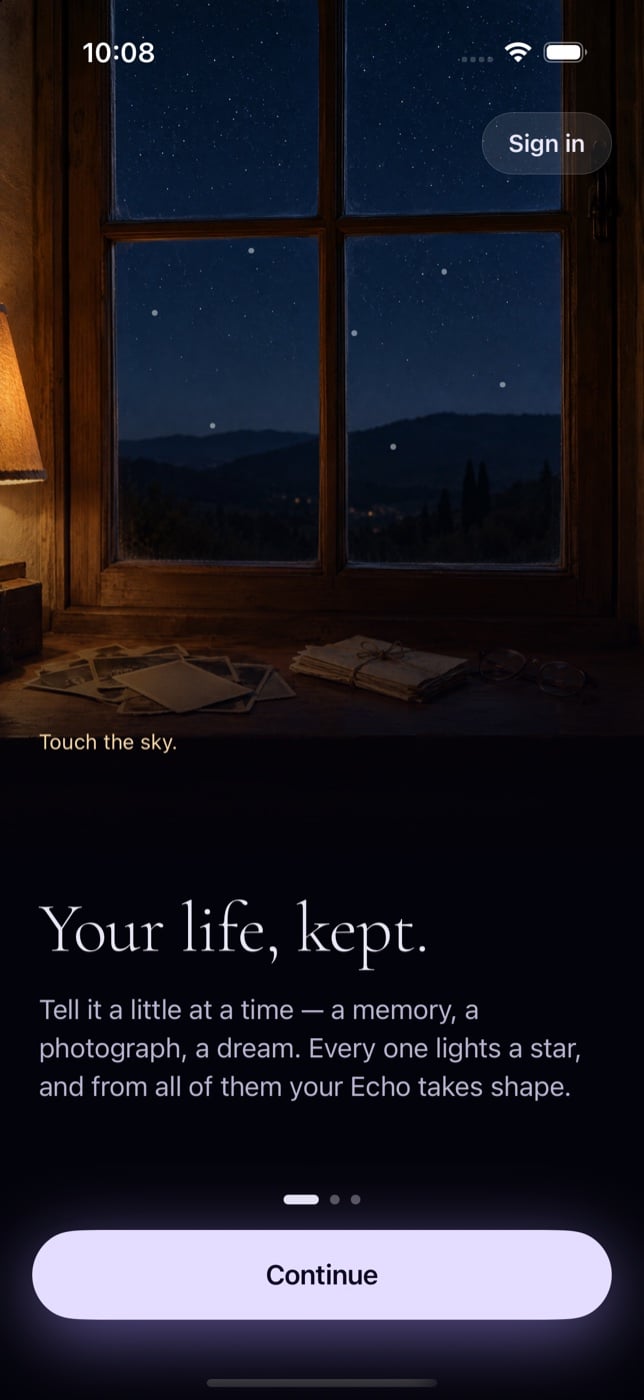
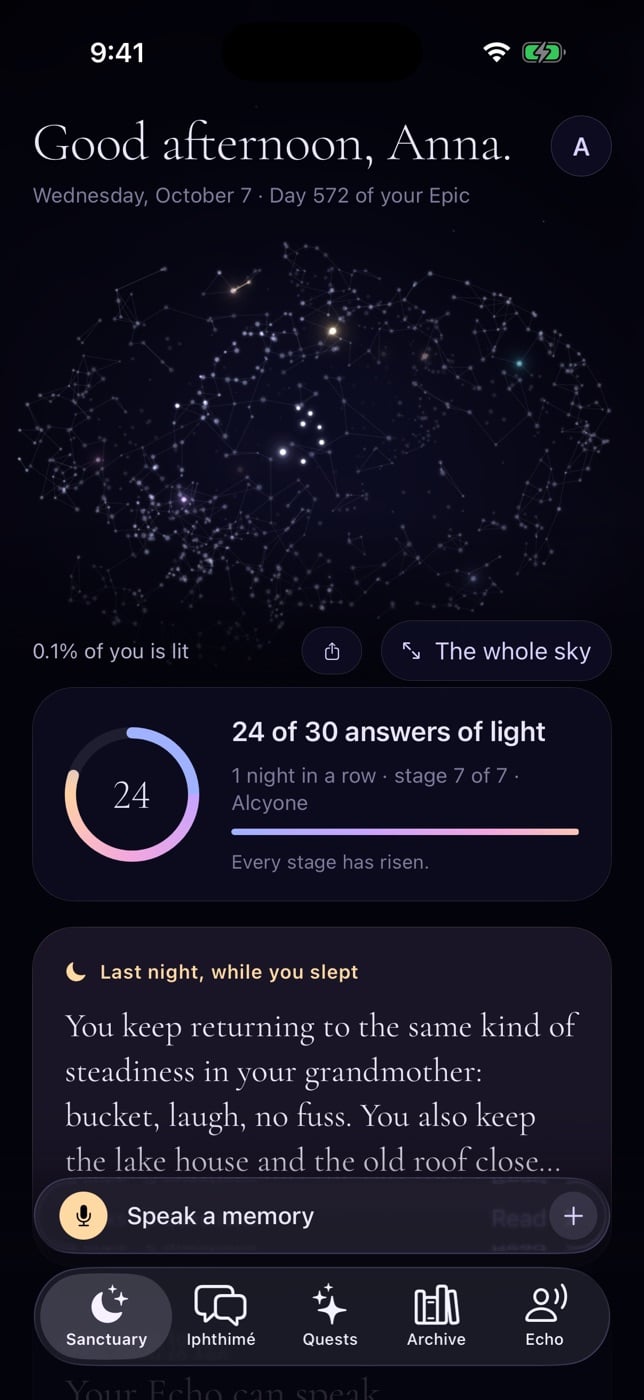
Your day, under your own sky.
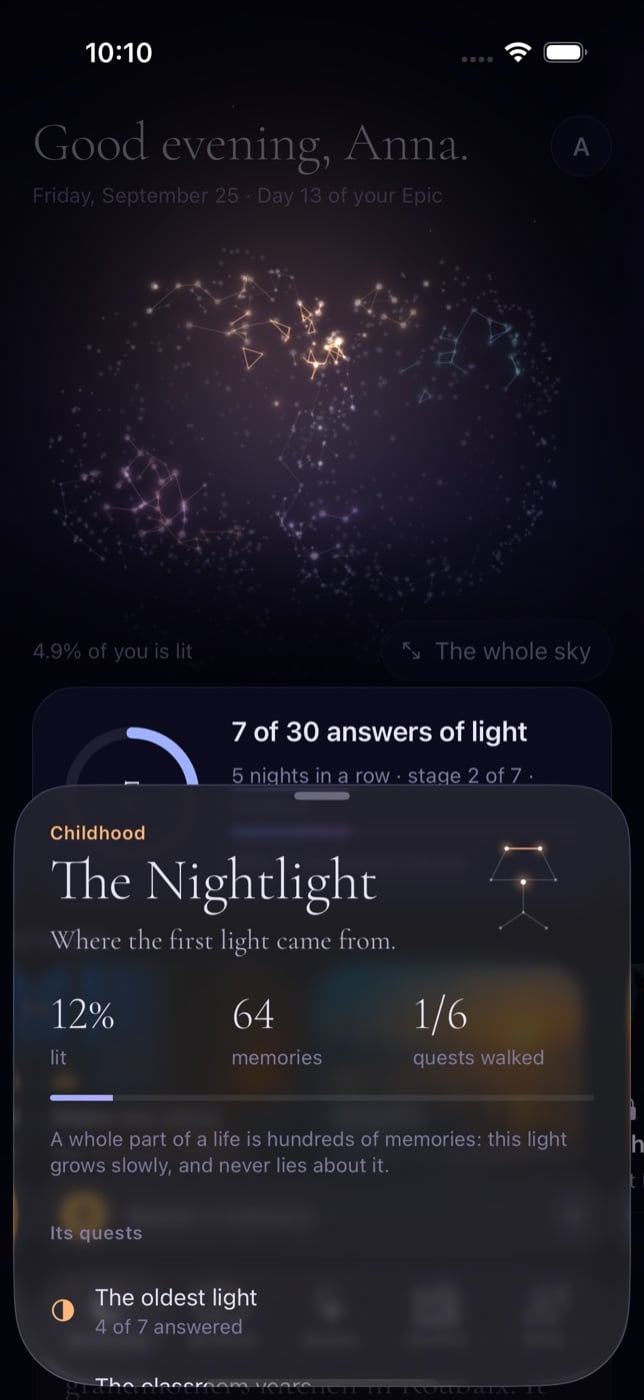
The same home as on the web. Your mind turns at the top of the page, lit where your life has been told — touch a lobe and it opens. Under it, the day: the light you gave, the note Iphthimé wrote while you slept, what she suggests next, a spark. No number to chase, no streak to protect.
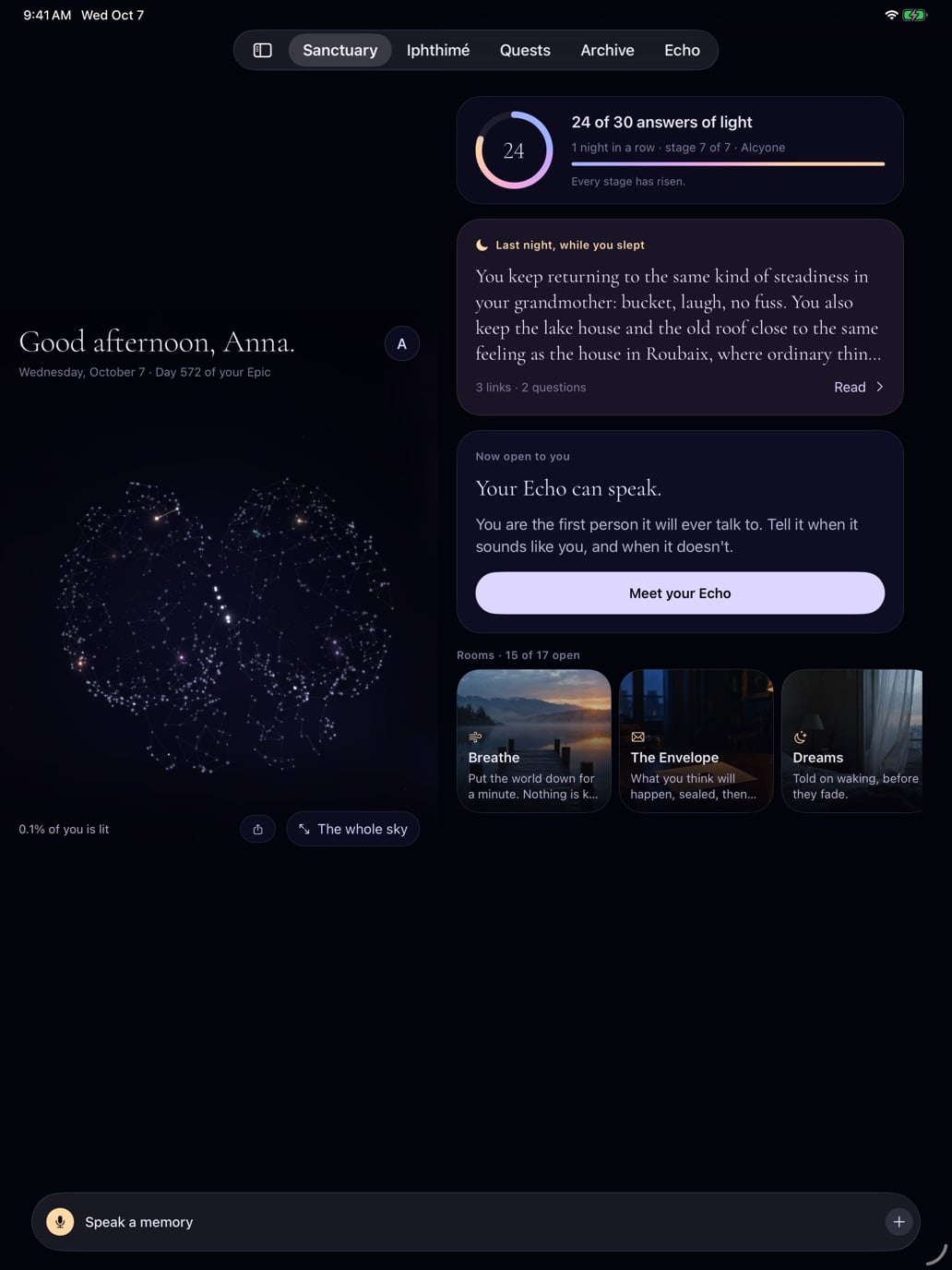
One app, two homes.
On iPad, Selione is not a phone stretched wide. The sky of your mind stands on the left and the day scrolls beside it; the quests keep their list on one side and the question you are answering on the other; Iphthimé, the Archive and the Echo read in a column made for the eye. The system's own sidebar and tab bar, every orientation — and the same archive as on your iPhone and on the web.
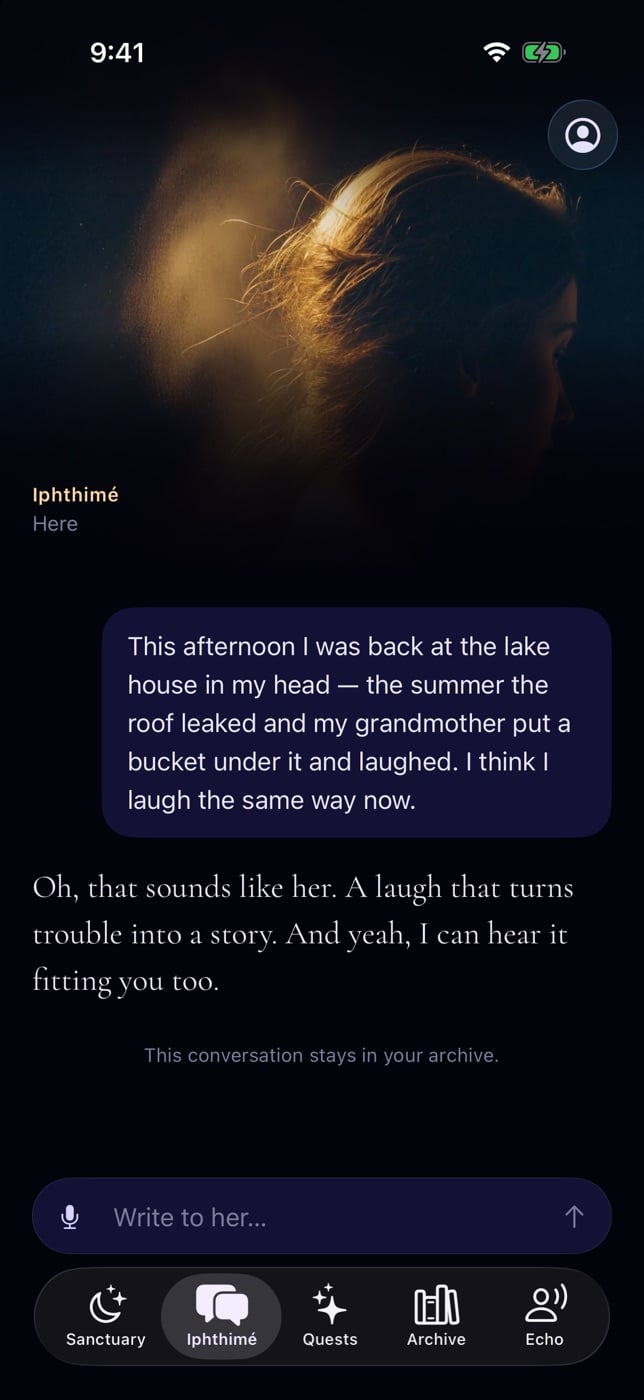
The same Iphthimé, alive.
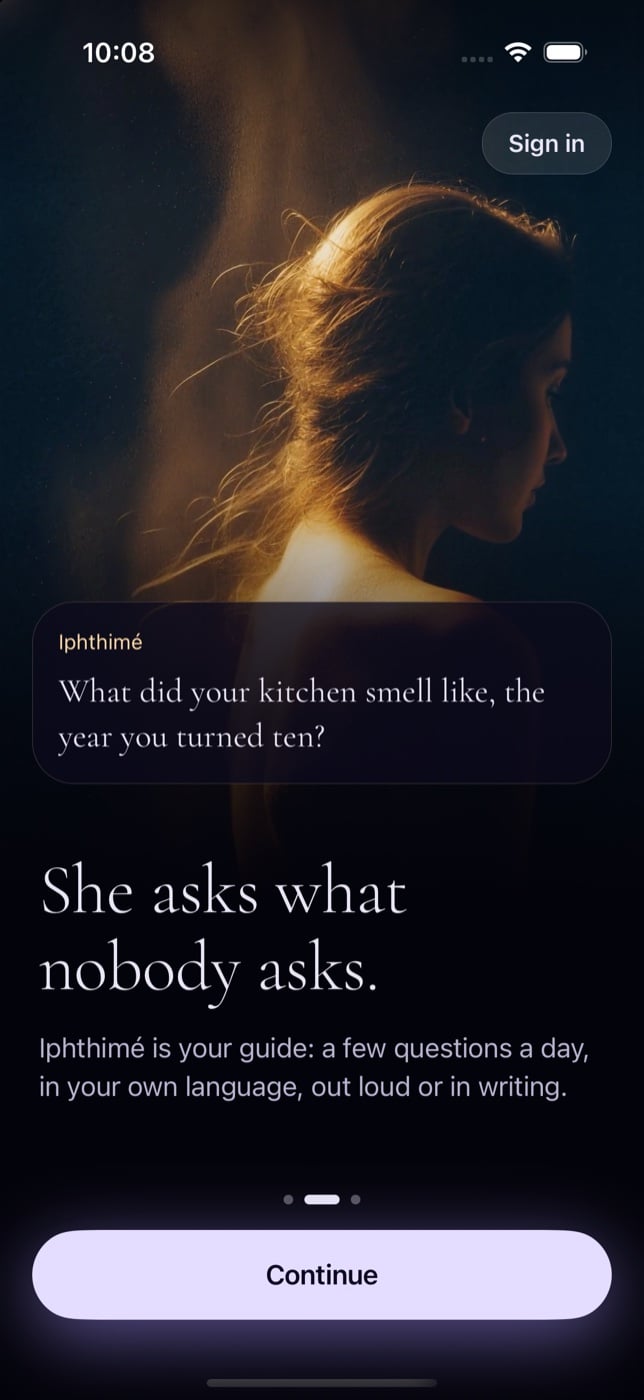
On the phone she is who she is on the web — the woman with the golden hair, seen from behind, the dust of light rising from her — filmed, and breathing. The light around her grows while you speak, and a slow wave climbs through the dust while she thinks. Write to her, or hold to speak, in your own language.
Your mind, drawn in stars.
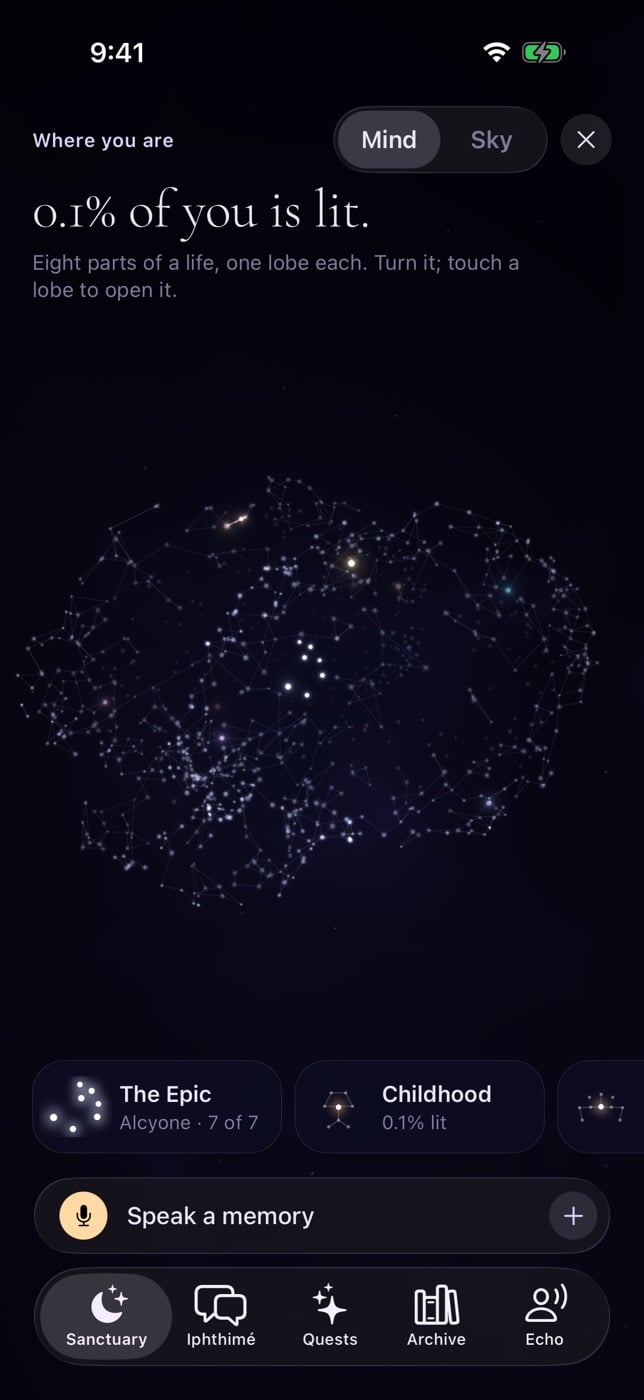
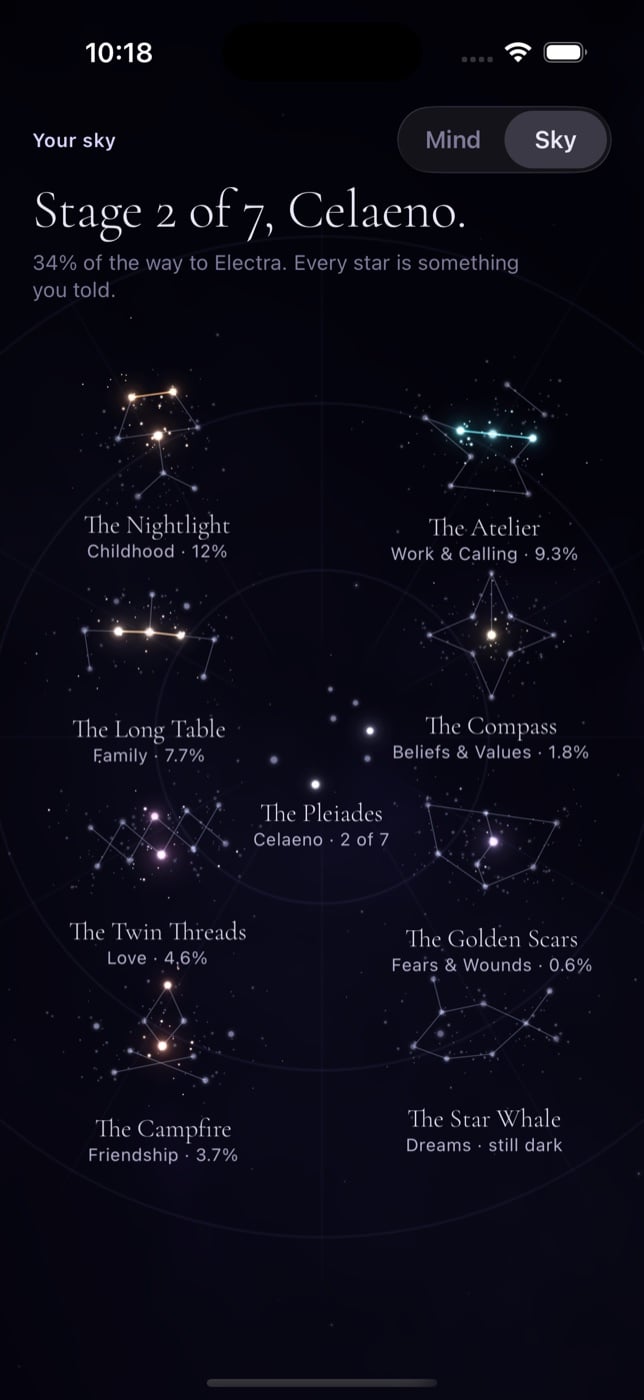
Everything you tell lights a star in a mind of a thousand lights, in the colour of the part of your life it belongs to. Turn it with a finger; touch a lobe and it opens. Then choose Sky, and the same stars leave the mind and fly to a chart: eight constellations around the Pleiades, the seven stages of your journey. Nothing is invented — the star that burns in the lobe of your childhood is the star that burns in the Nightlight.
The questions that light a life.
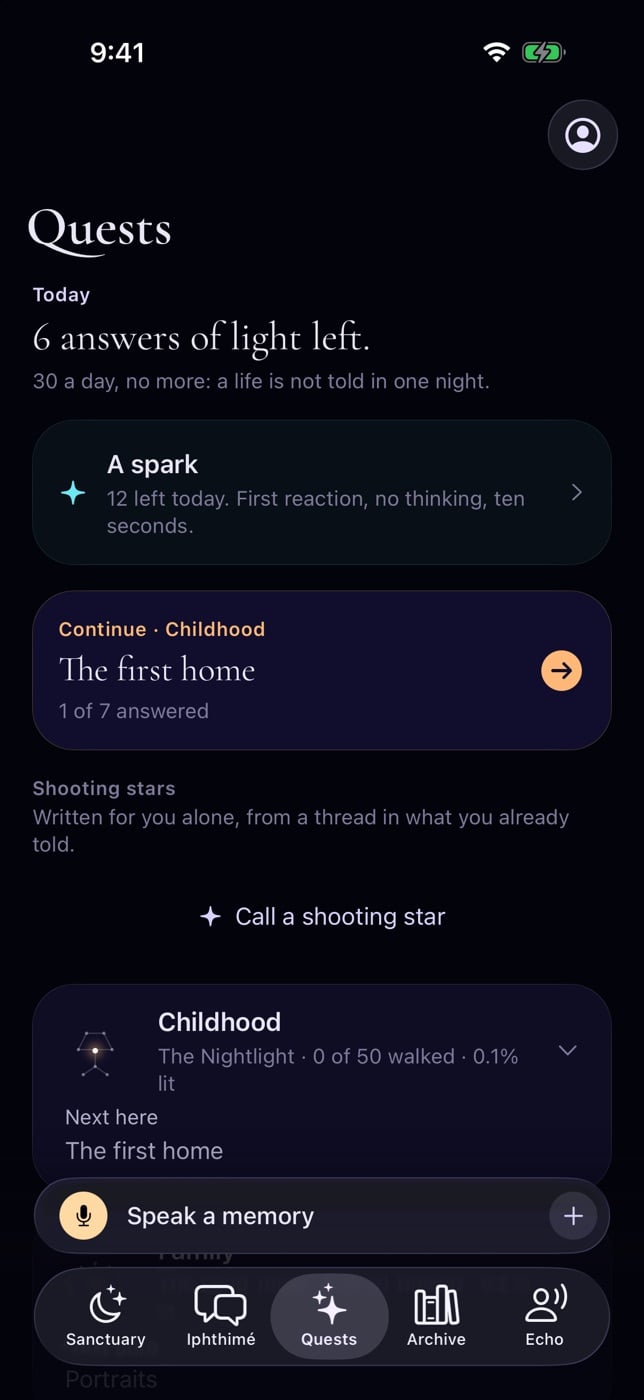
Constellation by constellation, hundreds of quests and their questions — and the shooting stars she writes for you alone, from what you have already told. One question at a time, written or spoken; she answers with what she kept and what it lit. 30 answers a day, no more: a life is not told in one night.
Under the constellations, the Atlas: quizzes with one right answer — the world's knowledge, the places you know, how you reason — so that your Echo says “no idea” exactly where you would, and knows your ground where you stand on it with ease. Graded by arithmetic, never by a model; nobody keeps a grade. A quiz question counts in the same day as a quest's.
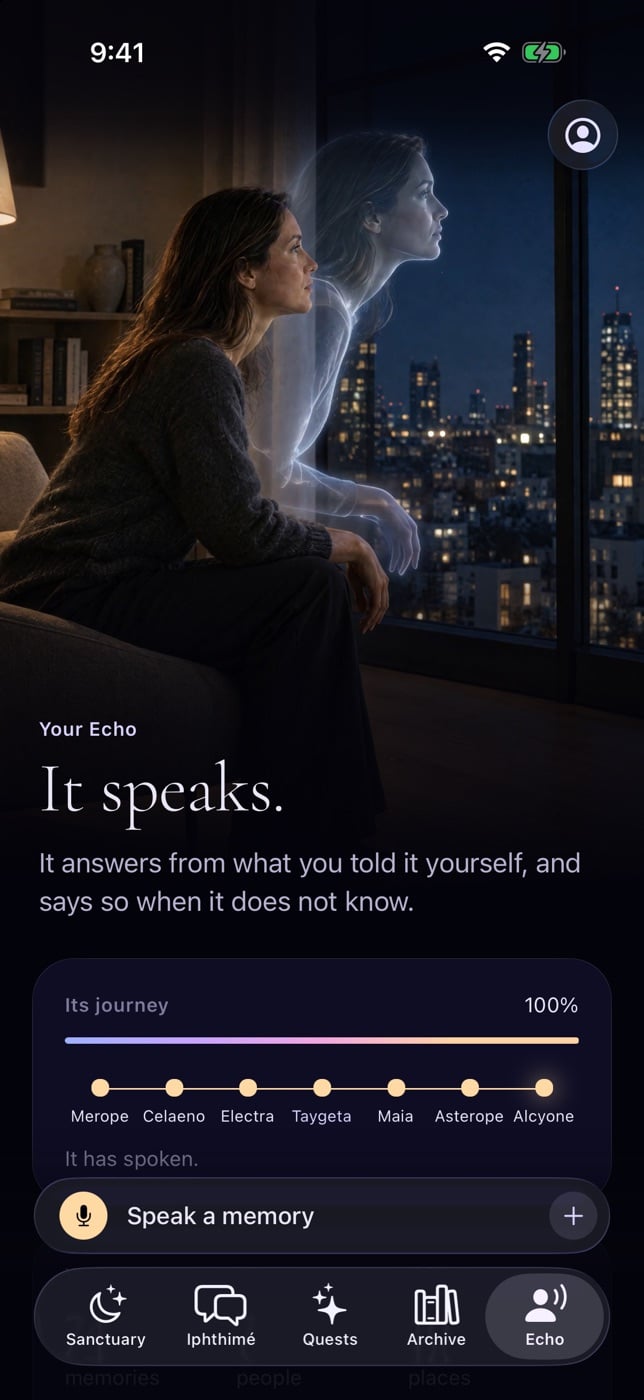
It steps out of you, a little more each day.
Before it speaks, your Echo is a shape slipping out of you — transparent, made of what you told. The further your journey, the further it has stepped out; at Taygeta it speaks its first words. It will only ever speak from what you said yourself, and nobody hears it until you decide who, and when.
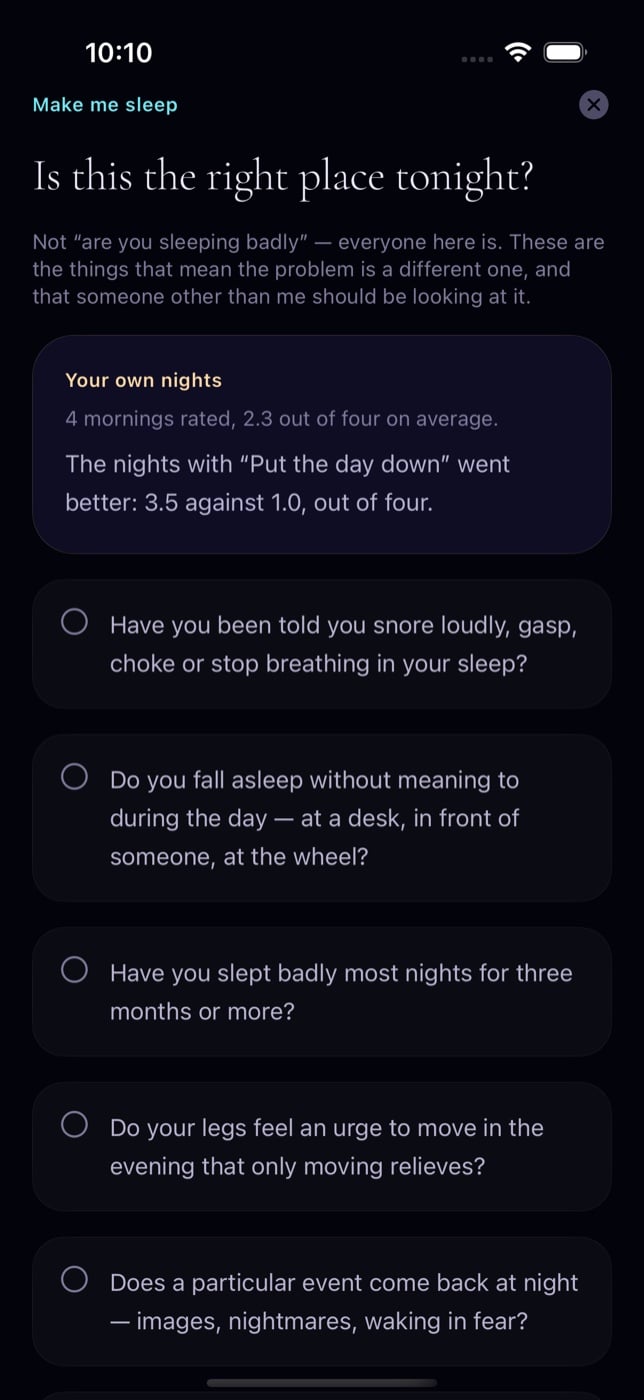
Ten minutes that end somewhere you have been.
Five rooms on a shelf under your sky, the same five every day, their order following the hour. The Return, to walk back into a moment one small thing at a time. Crossroads, the life you did not live. Breathe. And two rooms you can see but not yet enter: Make me sleep (pictured) and Mending are not open yet — we would rather show a closed door than offer something shaped like care.
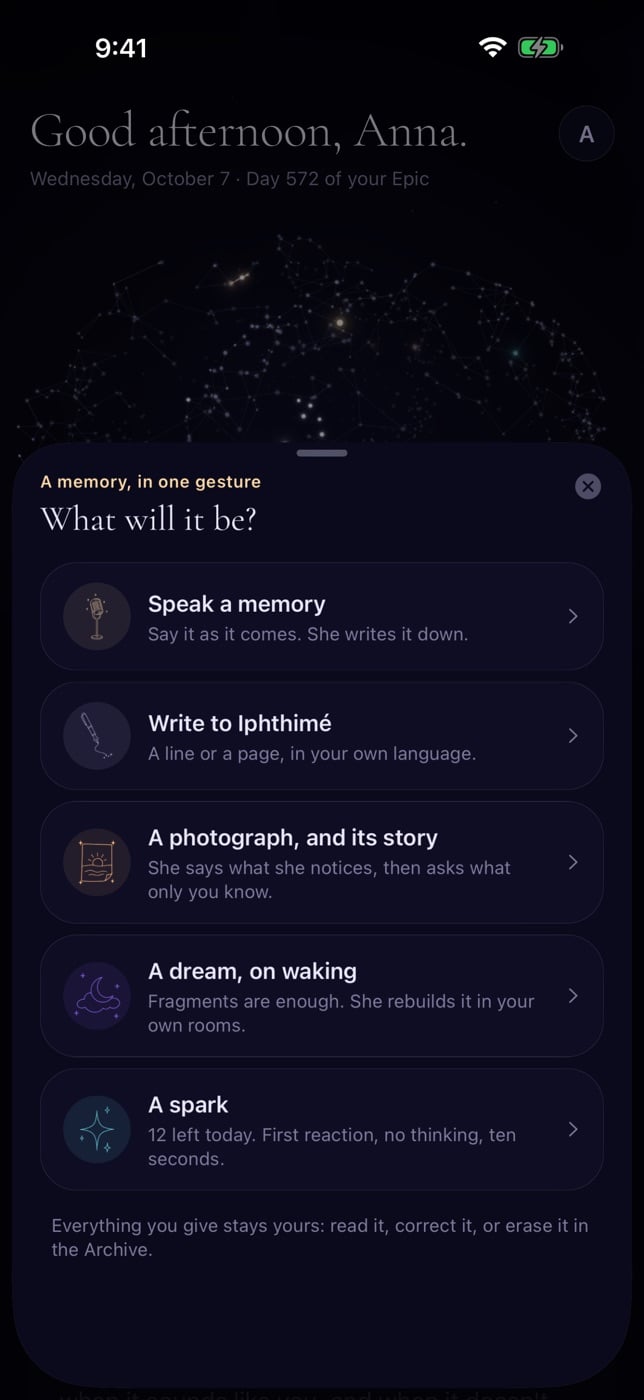
Speak, or hold for the rest.
The bar at the bottom of every tab speaks a memory in one touch. Hold it, or touch the plus, and one sheet offers everything else: a line to Iphthimé, a photograph and its story, a dream told on waking, a spark. No screen repeats those doors; one gesture, learned once.
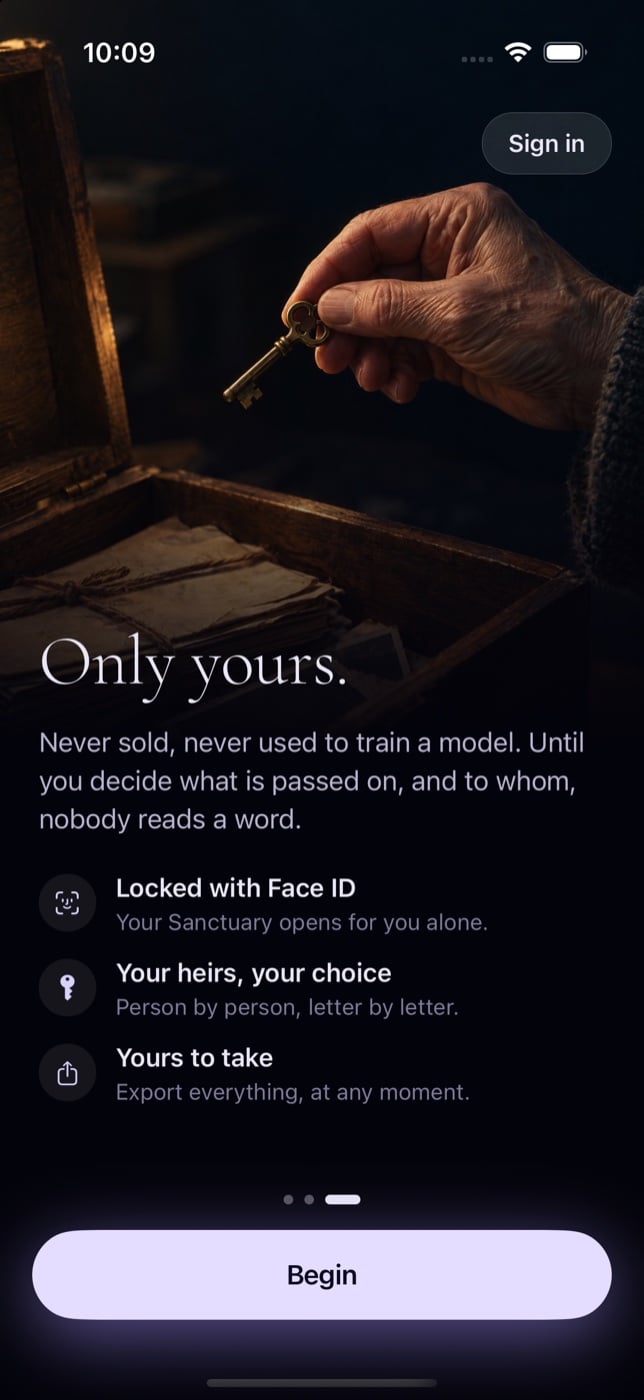
Locked, and never on display.
Face ID opens your Sanctuary. Nothing personal ever appears on the Lock Screen, in a notification, a widget or the app switcher. Dictation happens on the phone itself. You can export everything, or delete everything, from the app — and what you tell is never sold, never rented, never used to train a model.
Four screens, then your first memory.
What arrives with the app.
Speak from any tab; hold, and a photograph, a dream, a spark or a line to Iphthimé are one touch away.
In the morning the night's note and the dream door come first; in the evening, the Return and Breathe.
Not a phone stretched wide: the sky stands beside the day, the list beside the question, in the system's own sidebar — in every orientation.
The light of the day and your nights on the Home Screen — never a word of what you told.
What you say on a plane waits on the device and reaches Iphthimé when you land.
The system's own navigation on iPhone and on iPad, not a website in disguise. Android comes later.
Minds measured close to yours, each under a star's name: ask one to talk, talk if they say yes, give your first name only if you choose. Closeness is computed from what each of you measured here, never from your words — and your phone is told that a star wrote, never what.
Your text size, VoiceOver, reduced motion — respected everywhere, down to the mark that arrives when the app opens.
The Sanctuary is open on the web today.
Everything you tell there will be waiting in the app, the day it opens.